Successful with flaws
The full cycle worked: elite build, championship conversion, long contender run and a real 2025 return to October.
Chicago Cubs · 2012–2025
Chicago built an elite champion, kept pushing for several more Octobers, tore the core apart in 2021 and returned to 92 wins by 2025. The real argument is not whether 2016 worked. It is whether the Cubs knew when that window was closing—and how much the teardown actually built the next team.
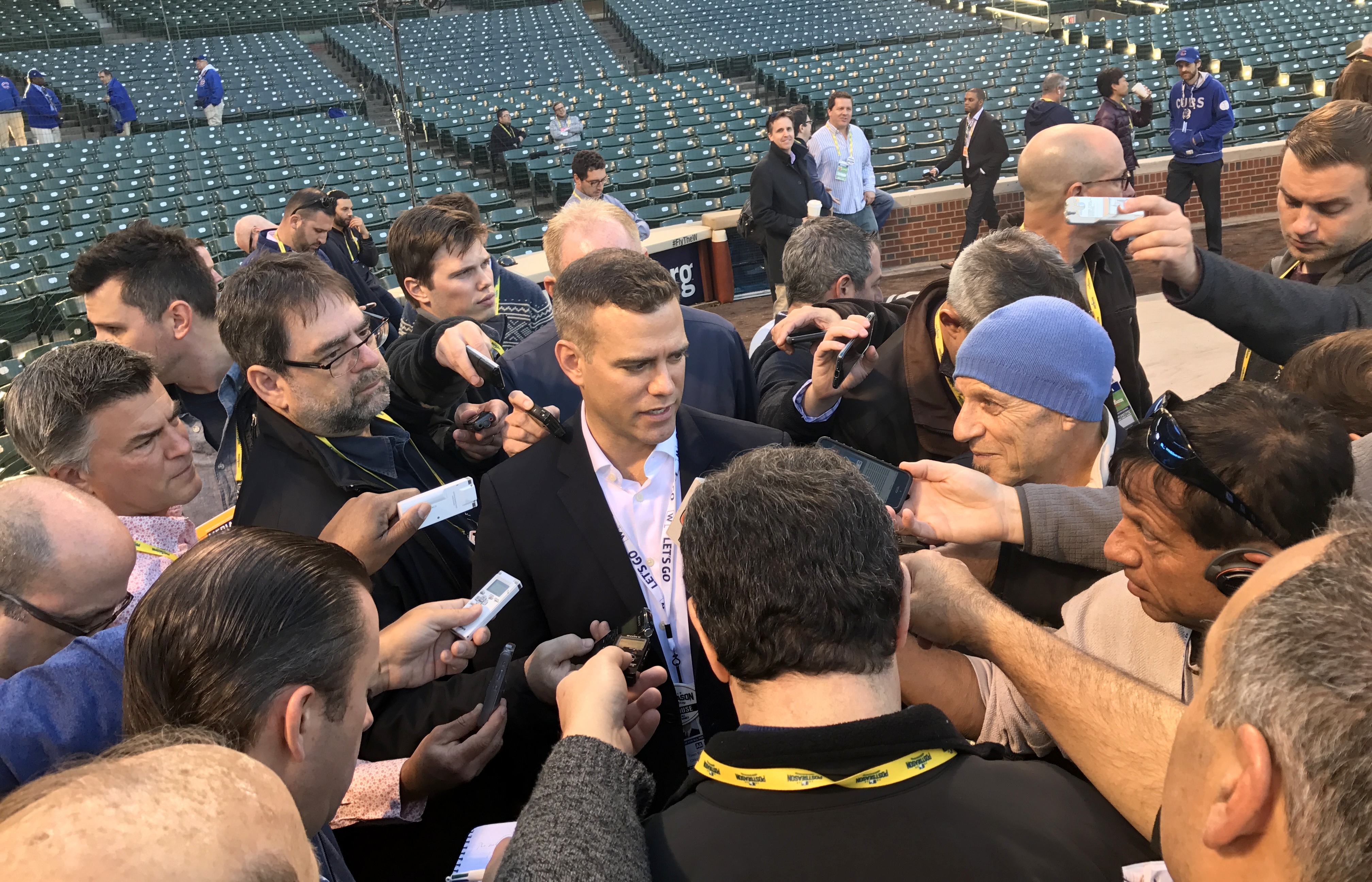
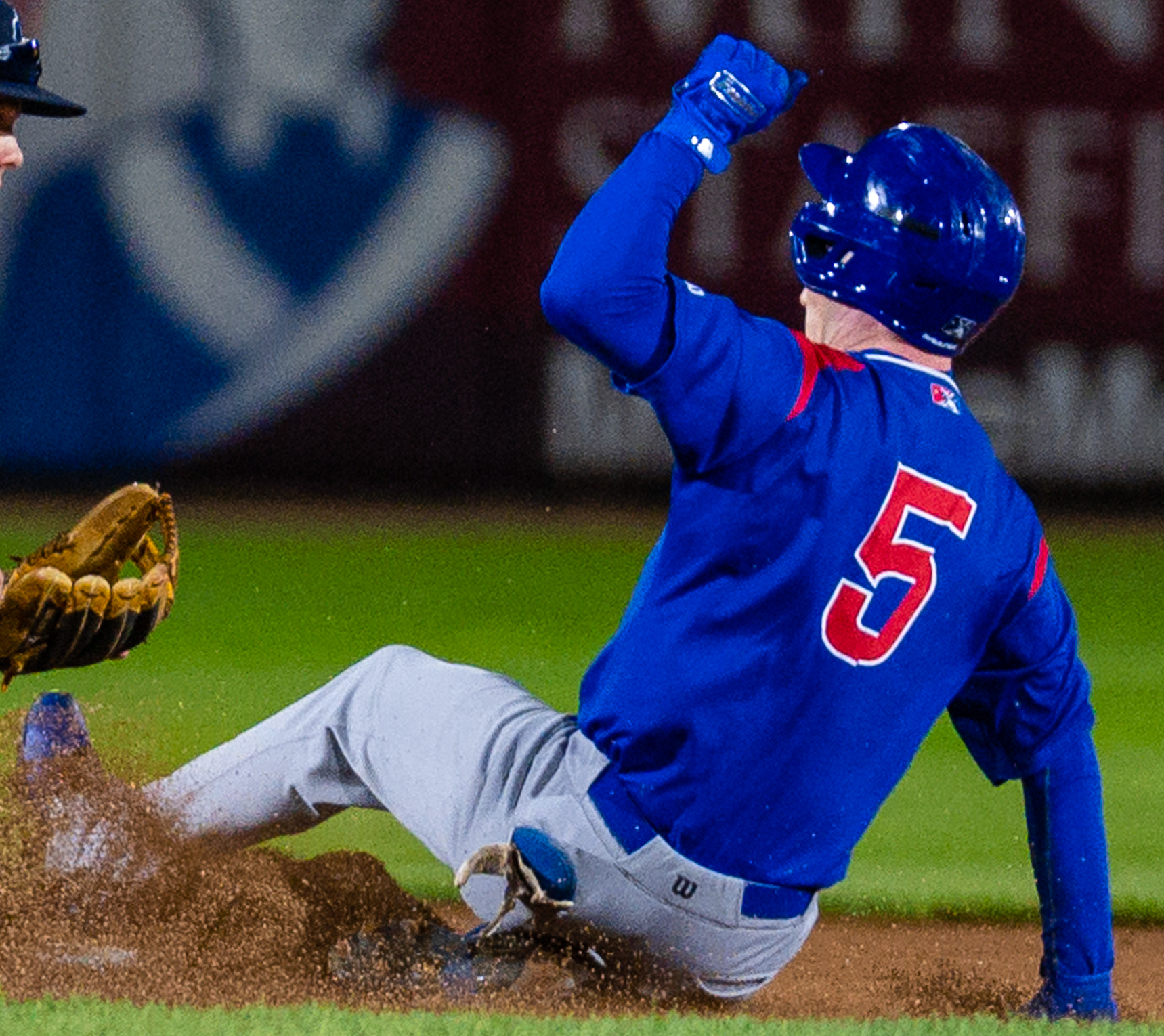
Real people, real photographs. Theo Epstein, Kris Bryant, Anthony Rizzo, Jake Arrieta and Pete Crow-Armstrong are authentic rights-reviewed source photography—never AI stand-ins.

The quick answer
The full championship lifecycle scores 82.0. Chicago built and converted an elite core, stayed competitive long enough to justify multiple runs, then waited until the 2021 deadline to cash out several stars whose control value had already shrunk.
The full cycle worked: elite build, championship conversion, long contender run and a real 2025 return to October.
2018 was too early to sell. 2019 was the first credible pivot. By the end of 2020 the decline evidence was much harder to ignore.
PCA and Palencia became major wins. Several other return branches produced little realized Cubs value by the 2025 cutoff.
Bottom line: the Cubs managed the full lifecycle well, but the best defense of the 2021 teardown is not “it built the next contender.” The stronger answer is that it supplied a few important pieces while Chicago built most of the next roster afterward.
Chapter 01 · The whole story
Trade short-term value for future control and develop the first core.
Five playoff berths, six series wins and the 2016 World Series.
Sell the old core, keep selected survivors and rebuild through several channels.
First postseason-series win since 2017.
Your guide through the story

How was the championship core actually built?
Rizzo, Hendricks and Arrieta came through rebuild trades. Bryant and Schwarber were premium draft hits. Báez and Contreras were inherited organizational assets that the new regime developed and retained. Soler came through the international market. Lester and Zobrist were veteran layers added when the young core was ready.
What this tells us: the build was elite because it did not depend on one draft class or one acquisition channel.
Why did 2016 work so well?
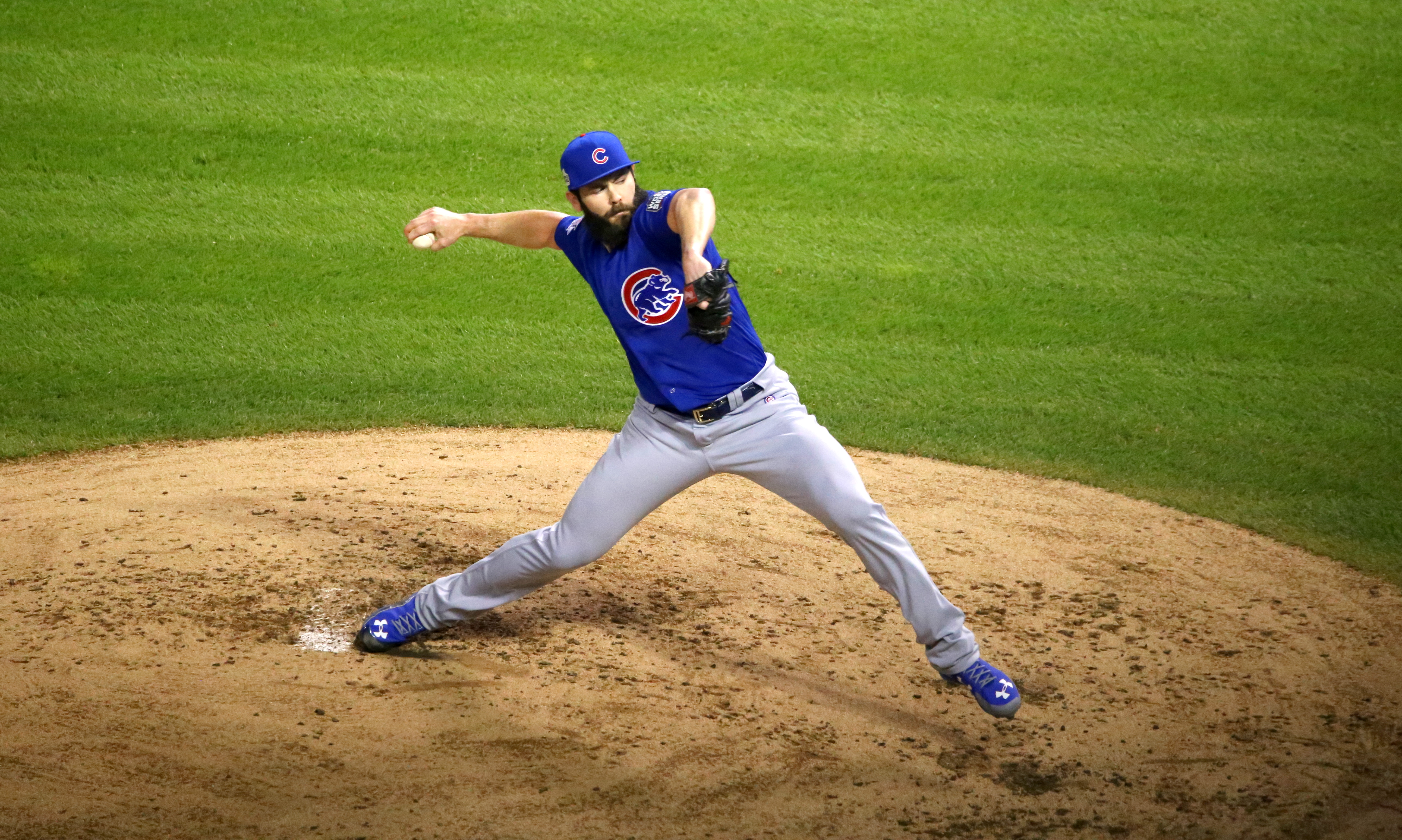
Bryant reached MVP level. Arrieta remained an ace. Hendricks led the league in ERA. Rizzo, Báez, Contreras, Lester, Zobrist and a deep defense all overlapped in one roster. Chicago won 103 games and converted that peak into the World Series.
What this tells us: there is no need to downgrade the peak to criticize what happened later. The peak did exactly what a rebuild is supposed to do.
Chapter 04 · Was it right to keep pushing after the title?
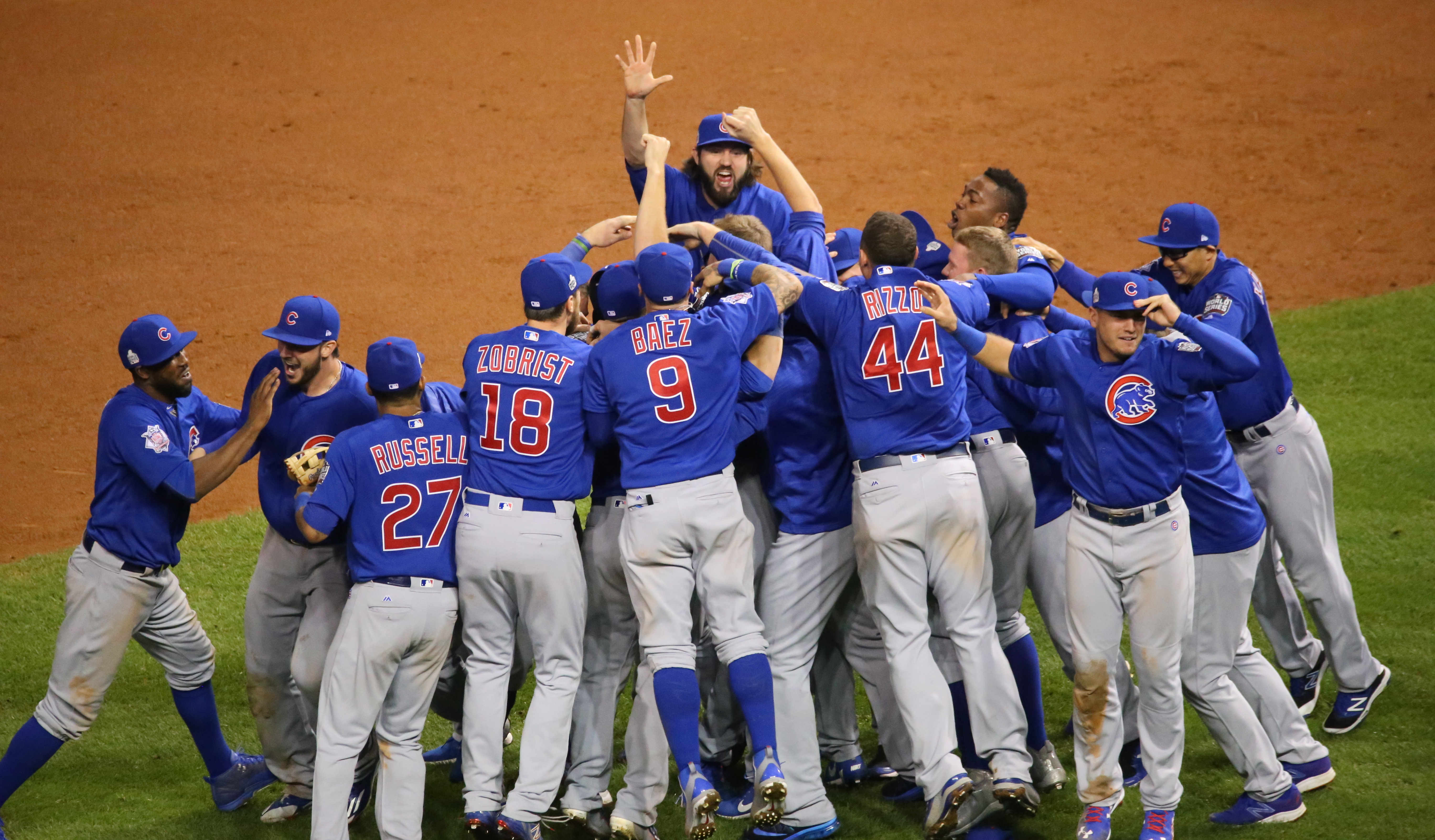
Chicago reached another NLCS in 2017 and won 95 games in 2018. A front office that broke up that team simply because it had already won would have been abandoning a still-legitimate contender.
The timing problem starts later.Did window spending get worse over time?
The 17 major contender moves average 77.2. The early 2015–17 window averages 83.2; the 2018–20 group falls to 70.4. Hamels, Cishek, Darvish's rebound and Castellanos were still useful. Chatwood and Kimbrel show the rising cost of patching needs externally.
targeted early-window moves
more reactive late-window moves
good, not elite
What this tells us: urgency did not destroy the window, but the roster became more expensive to repair as internal replenishment failed to match the first wave.
When did the window start dying?
The 2018 club still won 95 games despite major injuries. Selling then would have been premature. In 2019 the Cubs fell to 84–78 and missed October. Maddon departed. The 2020 club won its shortened-season division, but the same core offense struggled and Miami swept Chicago immediately.
What this tells us: the decline was gradual enough that reasonable people can disagree about one offseason—but not about the eventual direction.
Should the Cubs have sold earlier?
July 2021 was clearly the right time to sell once extensions failed, several stars neared free agency and an 11-game losing streak collapsed the buyer case. The harder criticism is that the winter after 2019 or 2020 offered more remaining control and therefore potentially more trade leverage.
What this tells us: “probably late” is not the same thing as “the teardown was a mistake.” The deadline decision itself grades very well.
What did the 2021 trades really return?
Pete Crow-Armstrong became a star. Daniel Palencia became a late-inning/closer piece. Kevin Alcántara retained real prospect value. But the Bryant, Kimbrel, Pederson and Tepera branches produced limited realized Cubs value by the cutoff, and Schwarber left with no trade return.
PCA
Palencia
realized-return average
What this tells us: the selloff was mixed and concentrated. Counting “prospects acquired” would dramatically overstate how much value Chicago actually realized.
Did PCA save the teardown—and did the teardown build 2025?
PCA is the direct star hit and makes the selloff materially better. But a transparent role-weight provenance check finds only 15.5% of the 2025 competitive core came directly from 2021 teardown descendants. Another 15.5% came from retained older Cubs such as Happ and Hoerner.
The largest share came from later drafting/development, free-agent and international spending, and unrelated trades—Horton, Shaw, Suzuki, Swanson, Imanaga, Busch, Tucker and others.
What this tells us: the more accurate phrase is hybrid rebuild. The 2021 selloff created important raw material; most of the 92-win team was assembled through new work afterward.
Chapter 11 · Prove it
Seven categories answer seven different parts of the argument so the World Series cannot erase the exit timing—and a mixed teardown cannot erase the championship.
What this tells us: the largest drag is the actual teardown return, not the 2016 title or the original build. Remove teardown conversion from the model and the lifecycle rises to 84.4.
Chapter 12 · Change what matters
Pick a fan philosophy. Every named model still lands in the same broad classification.
The balanced lifecycle model rewards the elite build and championship conversion while preserving real penalties for late-window efficiency, exit timing and the mixed teardown return.
Final verdict
They built an elite core, converted it into a championship and had enough evidence to keep competing through 2018. The criticism becomes stronger after the 2019 miss and especially after the 2020 offensive failure. Waiting until the 2021 deadline probably cost some trade leverage.
The selloff was necessary. PCA made it matter. But the 2025 contender was mostly built through what Chicago did after the selloff—not through the haul alone.
The most defensible summary is: successful lifecycle, imperfect exit, hybrid rebuild.